
Spring Awakening Pea, Leek & Shallot Soup
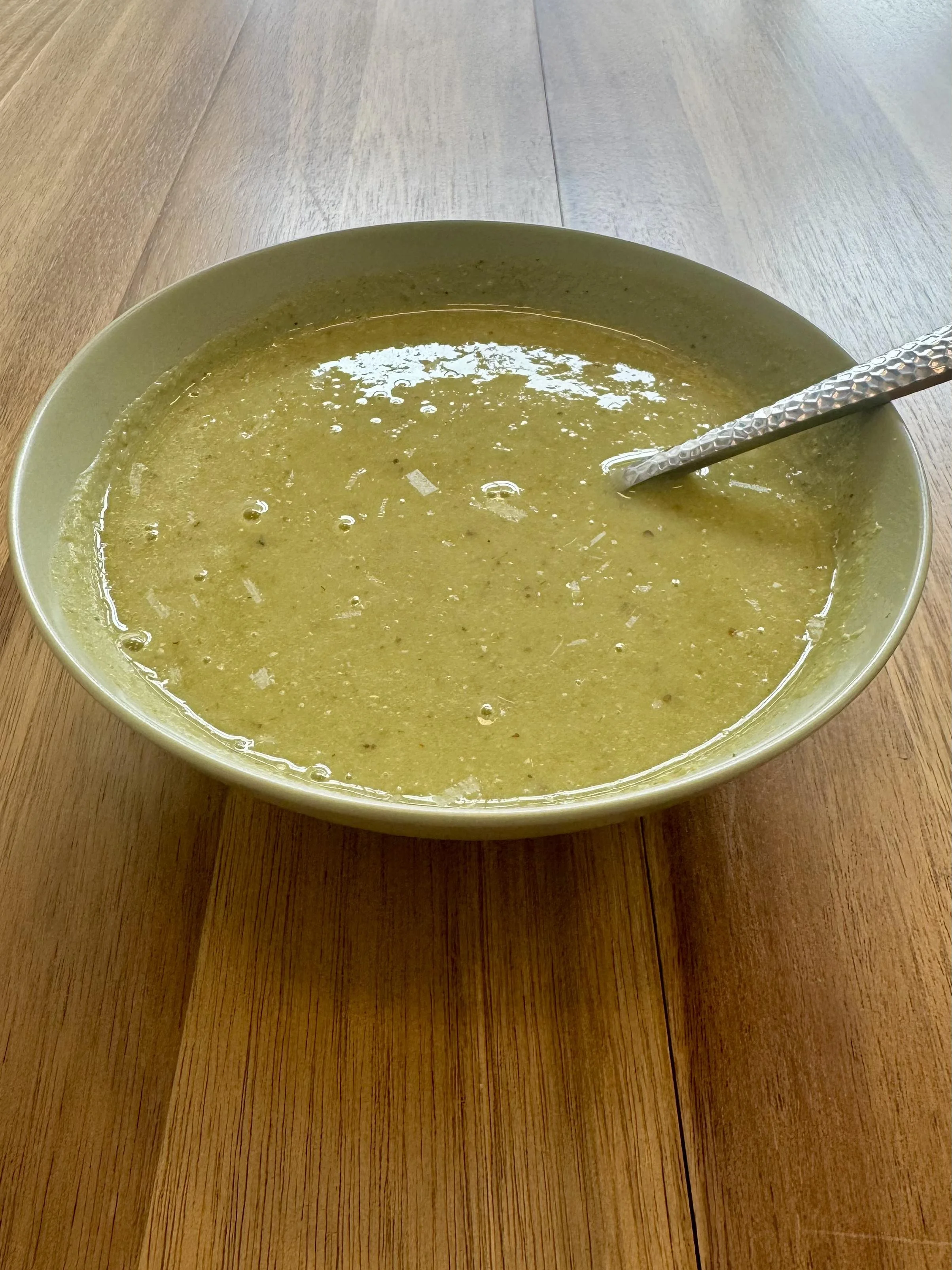
A warming, light Ayurvedic soup to pacify Kapha dosha — bright with peas, sweet leeks, and caramelized shallot, lifted by digestive spices that kindle agni and clear seasonal heaviness.
Vata △ use with care
Kapha ✓ balancing
Pitta ✓ in moderation
Ingredients
Ghee (or sunflower oil for vegan) — 2 tablespoons
Shallot, thinly sliced — 1 large
Leeks (white and light green parts, sliced) — 2
Garlic clove, minced — 1
Fresh ginger, grated — 1 tablespoon
Cumin seeds — 1 teaspoon
Mustard seeds — ½ teaspoon
Ground coriander — 1 teaspoon
Black pepper, freshly ground — ½ teaspoon
Cayenne pepper (to taste) — a dash or two or three
Fresh or frozen green peas — 2.5 cups
Broth of your choosing — 4 cups
Sea salt (to taste) — ½ teaspoon
Fresh lemon juice — 1 tablespoon
Fresh cilantro or mint (to garnish) — ⅛ cup
Fennel seeds (optional) — ½ teaspoon
Instructions
Note: I use this amazingly convenient Philips soup maker. All you have to do is add all of the ingredients and press start!
Bloom the spices: Warm ghee (or sunflower oil) in a large soup pot over medium heat. Add cumin seeds, mustard seeds, and fennel seeds if using. Let sizzle for 30–45 seconds until fragrant and popping — this is your tarka, the Ayurvedic technique of blooming spices in fat to release their full medicinal properties.
Soften the aromatics: Add leeks and shallot to the pot. Sauté for 6–8 minutes, stirring often, until softened and lightly golden. Add garlic and ginger and cook for another 2 minutes until fragrant.
Add ground spices: Sprinkle in coriander, black pepper, and cayenne. Stir constantly for about 30 seconds to toast the spices and coat the vegetables, being careful not to burn them.
Build the broth: Pour in broth of your choosing. Stir well and bring to a gentle boil.
Add peas and simmer: Add peas and season with sea salt. Reduce heat and simmer for 10 minutes until peas are tender and the broth is fragrant.
Blend (optional): For a smooth soup, use an immersion blender to partially or fully purée. For a chunkier texture, leave as is or blend only half the soup for body without losing all texture.
Finish and serve: Stir in fresh lemon juice to brighten the flavors. Ladle into bowls and top generously with fresh cilantro or mint. Serve hot.
Serving Tips
Enjoy this soup warm at lunch when digestive fire is strongest. Avoid eating cold or reheated the next day — Ayurveda favors freshly cooked meals.
To make more heating: increase the cayenne slightly or add a small piece of dried ginger for an even stronger Kapha-pacifying effect.
Serve warm. Enjoy slowly.
Why This is Kapha-Balancing
Leeks & shallot are pungent and light — pungent foods are among the most important tastes for reducing Kapha, helping to clear congestion and stimulate digestive fire (agni).
Peas are astringent and light, a Kapha-friendly legume that adds protein without heaviness.
Ginger, black pepper & mustard seeds form a warming trio similar to the classic Ayurvedic formula Trikatu, the traditional approach to reducing Kapha.
Cayenne brings additional heat to further stoke agni and counter Kapha’s cool, damp nature.
Lemon juice brightens digestion and aids fat metabolism.