
Three Yoga Poses for Kapha Season
Kapha season spans late winter through spring, typically from mid January through mid May. The earth and water elements are most predominant during this time, bringing with them a peak of heaviness, moisture, and stillness. This same quality can settle into our bodies and minds — showing up as sluggishness, low motivation, and a tendency to cling to comfort.
It is a time to kindle inner fire, shake off stagnation, and invite movement and lightness back into the body. Yoga practices that energize, uplift, and build heat are essential for this season.
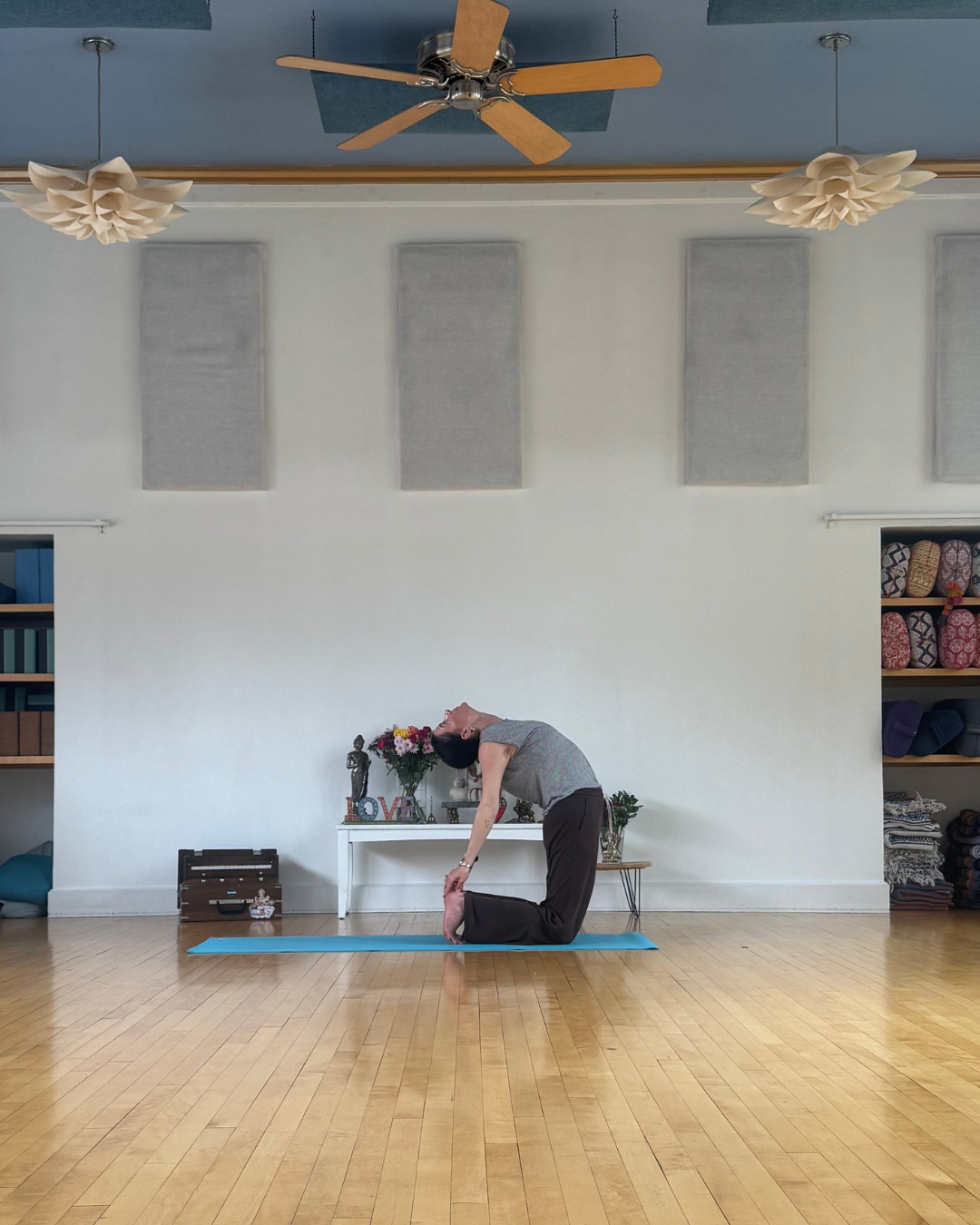
Ustrasana (Camel Pose)
Begin kneeling with your knees hip-width apart and the toes tucked on the mat. Pad your knees for more comfort.
Place your hands on your low back with fingers pointing down, elbows drawing toward each other.
On an inhale, lift through your chest and begin to arch gently backward.
If it feels available, reach one hand at a time back to hold your heels.
Let your head follow the natural curve of your spine — only drop it back if your neck feels comfortable.
Breathe into the front of your chest and the tops of your thighs.
Hold for 5–8 breaths, then bring your hands back to your low back and slowly rise on an inhale.
Benefits: Camel Pose opens the front body and stimulates the respiratory system, encouraging the deeper breathing that counters Kapha's tendency toward congestion and inward collapse. The heart-opening quality of this backbend lifts mood and helps dispel the emotional heaviness that can accompany the transition from winter into spring.
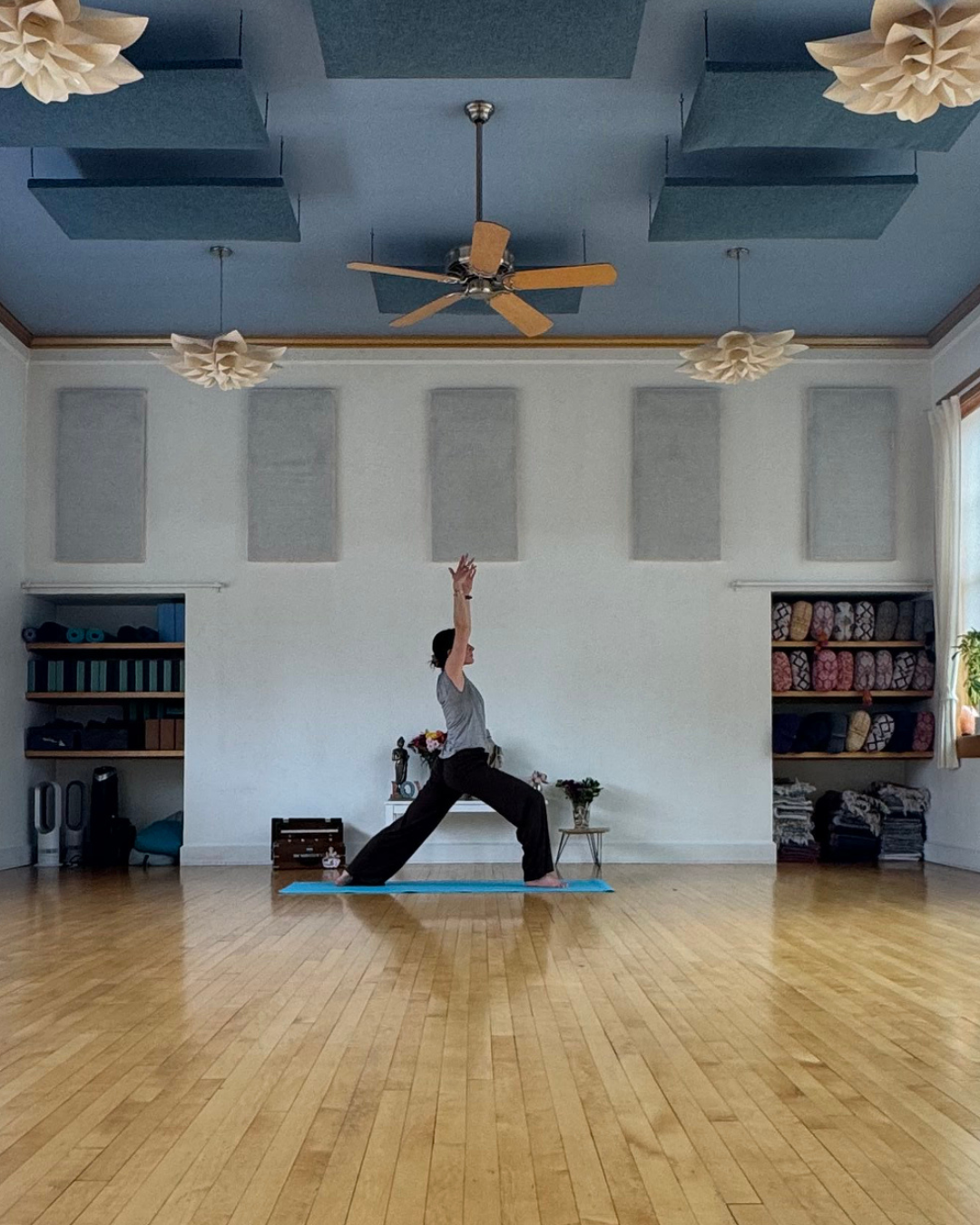
Virabhadrasana I (Warrior I)
Begin standing, then step your left foot back about three to four feet, angling it out to 45 degrees.
Position your hips toward the front of your mat as best you can.
Bend your right knee directly over your right ankle, aiming for a 90-degree angle.
Press firmly into the outer edge of your back foot.
On an inhale, sweep both arms overhead with your palms facing each other.
Draw your shoulders down away from your ears and lift through your chest.
Hold for 5–8 breaths, then step your feet together and repeat on the other side.
Benefits: Warrior I builds heat, strength, and determination in the lower body while the upward reach of the arms lifts energy out of stagnation. This pose cultivates the confidence and vitality that Kapha individuals need during a season that can encourage withdrawal and low motivation.
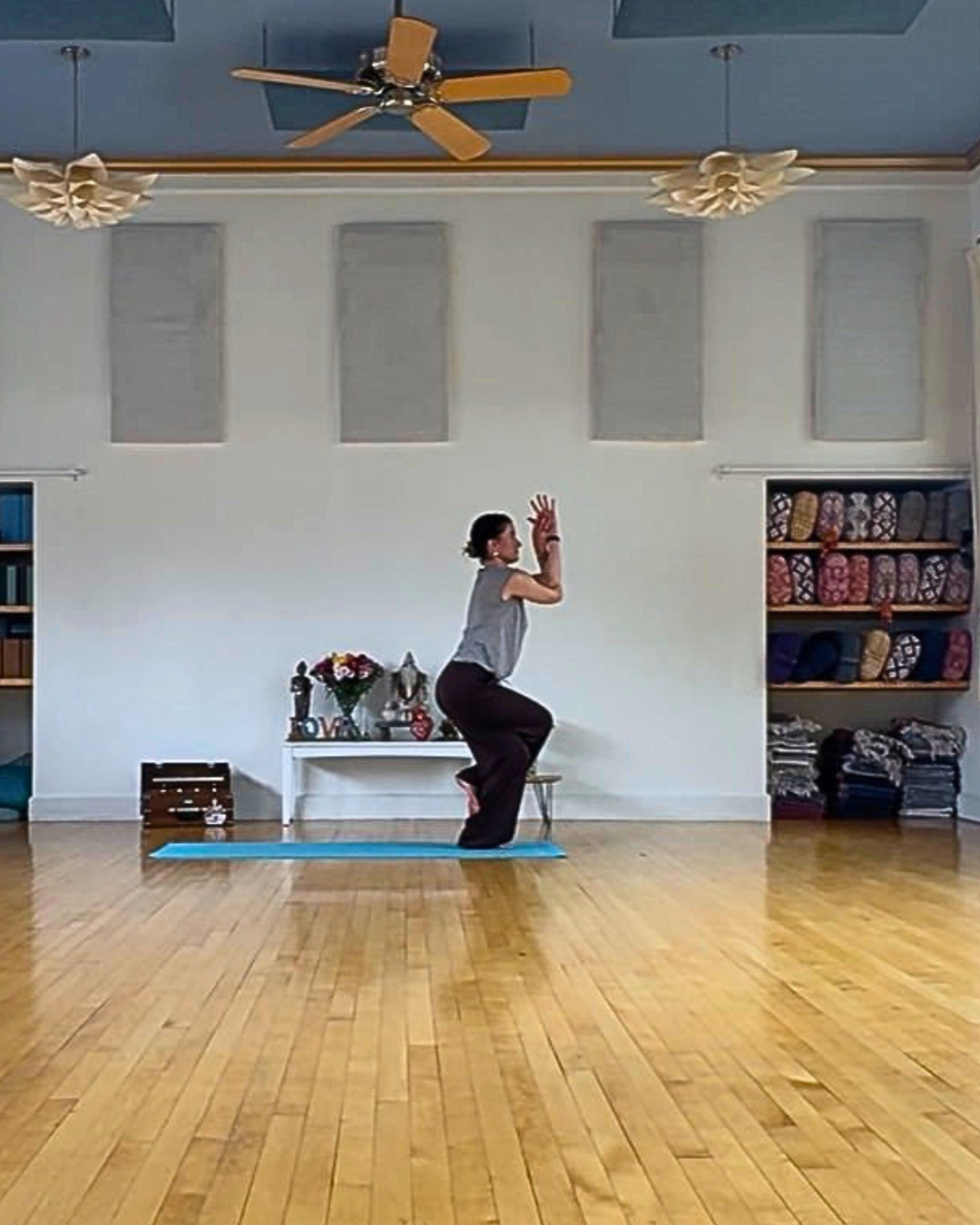
Gomukhasana (Eagle Pose)
Begin standing with feet hip-width apart and a soft bend in your knees.
Shift your weight into your left foot and lift your right knee toward your chest.
Cross your right thigh over your left thigh, and if you're able, hook your right foot behind your left calf.
Bring your arms out in front of you, cross your left arm over your right, and bend your elbows to wrap your forearms — fingertips reaching up.
Lift your elbows to shoulder height and draw them slightly away from your face.
Find a soft gaze at a fixed point in front of you to help with balance.
Hold for 5–8 breaths, then slowly unwind and repeat on the other side.
Benefits: Eagle Pose demands full-body engagement and sharp mental focus, directly countering Kapha's heaviness. The wrapping and releasing of the arms and legs stimulates circulation and lymphatic flow, while balancing on one leg builds warmth and helps lift the mental fog common in these slower months.
Practice these poses earlier in the morning when your energy is freshest and Kapha's natural inertia is easiest to overcome. Move with a little more pace and intention than you might in other seasons, and favor standing postures that challenge your balance and build heat. During Kapha season, the simple act of showing up — especially when motivation is low — is the most powerful practice of all.