
Flavors for the Season: Eating for Kapha
Every bite you take is a conversation with your body. And right now, in the heart of Kapha season (roughly late January through May), your body is asking for something specific — lightness, warmth, and a little spark.
One of Ayurveda's most practical tools for staying in balance is flavor. Not just for pleasure, but as medicine. In Ayurveda, there are six distinct tastes: sweet, salty, sour, pungent, bitter, and astringent. Each one has a relationship with your body — some build and nourish, others clear and stimulate. And depending on the season, leaning into certain flavors while pulling back on others can make a meaningful difference in how you feel.
During Kapha season, that means getting intentional about three in particular: pungent, bitter, and astringent.
Why These Three Flavors?
Kapha is defined by the qualities of earth and water — heavy, cool, moist, and slow. These are beautiful qualities when balanced, but as the season wears on, they can begin to accumulate. You might notice it as congestion, water retention, sluggish digestion, or that particular kind of fatigue that more sleep doesn't seem to fix.
The flavors we eat either echo those qualities or counter them. Here's how the Kapha-balancing three work:
Pungent foods are warming and drying — exactly what a heavy, damp season calls for. Think of the heat that blooms in your chest after a bite of fresh ginger or a pinch of cayenne. That warmth is your digestive fire being stoked.
Bitter foods are drying and light, and they gently stimulate digestion without adding bulk. They're the flavors of dark leafy greens, turmeric, and fenugreek — foods that feel clarifying rather than filling.
Astringent foods help reduce moisture and create a subtle contracting quality in the body. Think of the slight dryness you notice after biting into a crisp apple or a handful of lentils. That quality actively works against Kapha's tendency toward retention and heaviness.
What to Pull Back On
The flip side matters just as much. Sweet, sour, and salty tastes — while nourishing and balancing in other seasons — tend to add heaviness and encourage the body to hold onto water during Kapha season. This doesn't mean eliminating them entirely, but it does mean they shouldn't be driving your plate right now.
Spices: Your Most Accessible Tool
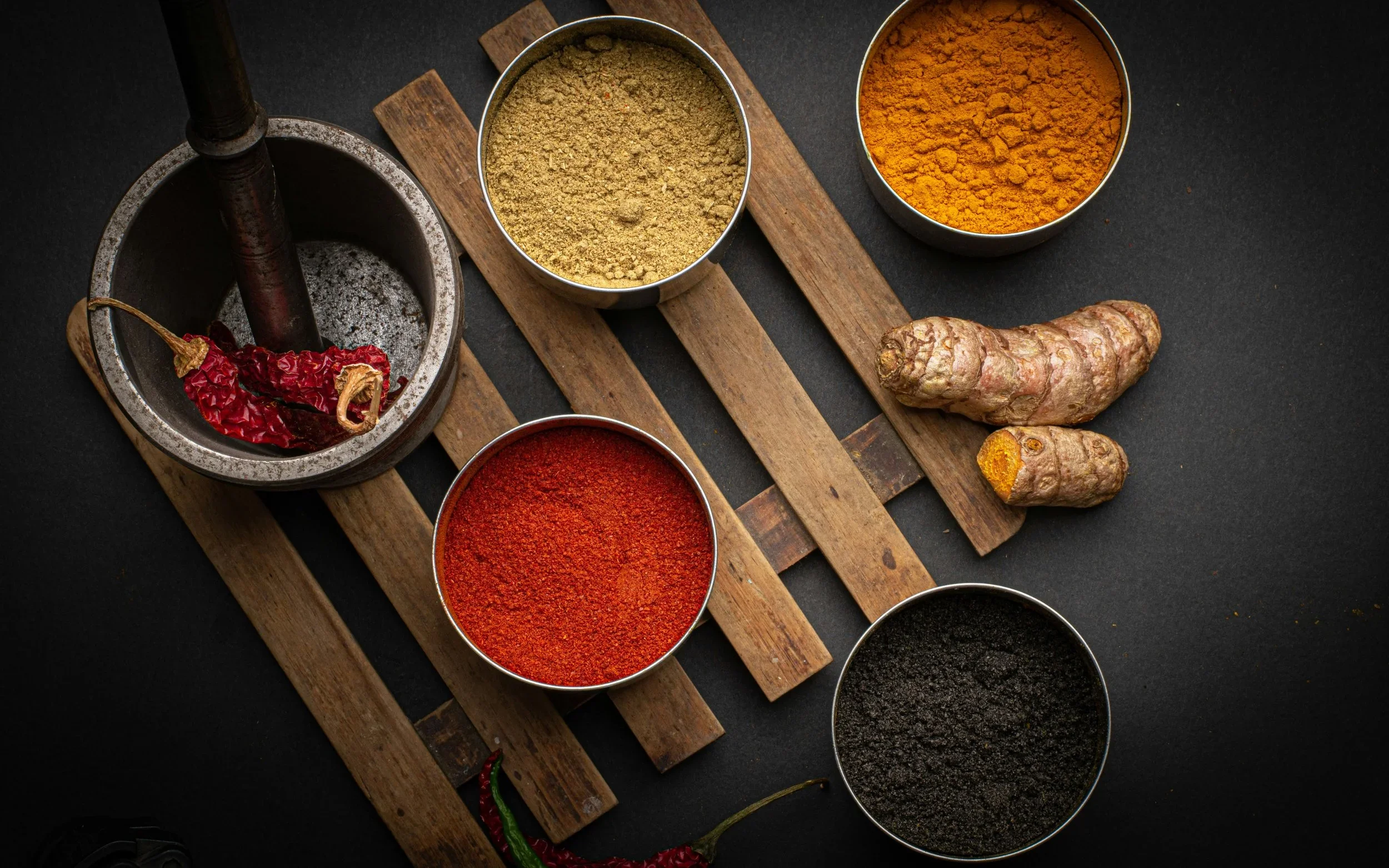
You don't need to overhaul everything you eat. One of the simplest ways to shift the flavor profile of your meals is through spice. These nine are your Kapha season kitchen essentials:
Ginger (fresh + dried) — warming, stimulating, a cornerstone of digestive support
Cumin — gently pungent, aids digestion and metabolism
Coriander — mildly pungent and astringent, supports healthy elimination
Black pepper — heating and drying, a powerful Kapha pacifier
Cayenne — fiery and stimulating, use with intention
Turmeric — bitter and warming, supports circulation and reduces congestion
Parsley — astringent and fresh, a simple way to lighten any dish
Mustard seed — pungent and heating, especially wonderful when bloomed in oil
Fennel seed — gently pungent and digestive, balancing without being too intense
The beauty of spices is that they transform a meal without requiring you to eat differently. A simple bowl of roasted vegetables or lentil soup becomes a Kapha-balancing meal when you season it with ginger, cumin, and black pepper.
A Simple Starting Point
You don't need to get it perfect. As we always say at When Living — this is a practice, not a performance. Start with one spice you're not currently using and find a place for it this week. Notice how your body responds. That awareness, built slowly over time, is exactly what Ayurveda is asking of you.
Curious where you're starting from? Take our free Seasonal Blueprint Quiz to learn how your constitution shapes what your body needs as the seasons change.