
Oil Is Medicine: The Ayurvedic Guide to Using the Right Oil for Your Body and the Season
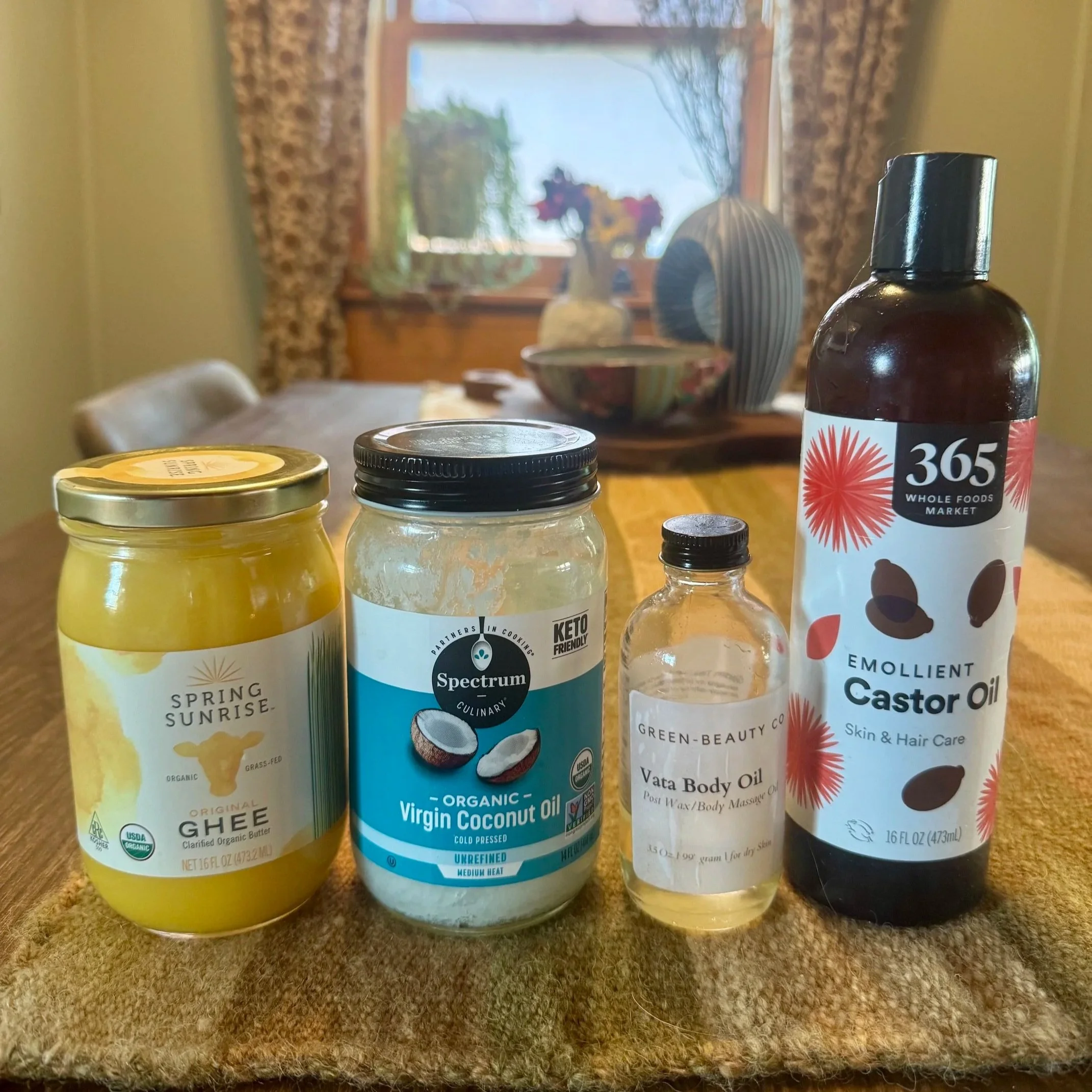
In Ayurveda, oil isn't a beauty product. It's one of the oldest and most effective tools for healing the body from the outside in.
If you grew up in a Western household, oil and the body had a complicated relationship. Oil was something you removed — from your skin, your hair, your food. The goal was always less.
Ayurveda sees it completely differently. Oil is considered one of the most powerful therapeutic substances available — not because it moisturizes (though it does), but because of what it does beneath the surface. How it moves through tissue, carries medicinal herbs into the body, regulates the nervous system, and creates conditions for healing.
The question Ayurveda asks isn't whether to use oil. It's which oil, applied where, at what time of year.
Why Oil Matters in Ayurveda
At the core of Ayurvedic theory are the doshas — three energies (Vata, Pitta, Kapha) that govern everything from digestion to how you respond to stress. Each dosha has qualities that shift with the seasons, and oil is one of the primary tools for keeping them in balance.
Warm oil is especially effective for Vata dosha, which is cold, dry, light, and mobile. When Vata accumulates — through stress, irregular schedules, screen time, cold weather — the body becomes anxious, scattered, and dry. Oil counters this directly. It is warm, heavy, smooth, and stable.
But choosing the right oil for your constitution and the current season is what determines whether it heals or aggravates. A heavy sesame oil that nourishes deeply in winter can be too heating in summer. A light coconut oil that cools Pitta in July may not be enough for dry Vata season in October. The season matters as much as the person.
Choosing the Right Oil
Sesame oil is the most widely used oil in Ayurveda — warming, deeply nourishing, and quick to penetrate tissue. The first choice for Vata imbalance and cold, dry seasons. If you only have one oil, make it sesame.
Coconut oil is cooling and light — ideal for Pitta types and summer use. Soothing for inflamed skin and scalp, and the best oil to reach for as we move into Pitta season now.
Castor oil is heavy and deeply penetrating, moving into the deepest layers of tissue. The oil of choice for pain, inflammation, and detoxification. Therapeutic rather than everyday.
Brahmi oil is sesame infused with the herb brahmi, which has a direct calming effect on the nervous system. Used specifically for the head and scalp — one of the most effective tools for anxiety, racing thoughts, and poor sleep.
Ghee is the only oil consumed internally in large quantities in Ayurveda. Considered the most nourishing of all fats, it supports digestion, lubricates the intestinal tract, and carries medicinal herbs deeper into the body.
Five Ways to Use Oil Correctly
1. ABHYANGA — FULL BODY SELF-MASSAGE
Abhyanga is the practice of massaging warm oil into the entire body before bathing — ideally daily, or a few times per week. It works simultaneously on the skin, muscles, lymphatic system, and nervous system.
Use long strokes on limbs, circular strokes on joints, and spend extra time on the feet. Leave the oil on for at least 20 minutes before showering so the warmth drives it deeper into tissue. This is usually time to throw on a robe or towel and tend to other bathroom rituals or tend to a simple task while the oil sinks in.
Best oil by season: Sesame in autumn and winter. Coconut or sunflower in summer. A 50/50 blend in spring.
2. CHAMPI — SCALP AND HEAD MASSAGE
The scalp is a primary site of Vata accumulation — which is why so many people carry tension, dryness, and mental restlessness in the head. Champi involves working warm oil into the scalp and hair, massaging from the crown outward to the temples, nape of the neck, and behind the ears.
The scalp contains marma points that connect directly to the nervous system. Regular champi calms the mind, improves sleep, and nourishes hair follicles. Once a week is enough. Leave oil on for at least 30 minutes, slowly building to keep the oil on for longer. It will take time for your scalp to adjust.
Best oil: Brahmi for anxiety and poor sleep. Coconut for Pitta or inflamed scalp. Sesame for dryness and Vata imbalance.
3. OIL PULLING — ORAL HEALTH AND DETOXIFICATION
Oil pulling is the practice of swishing oil around the mouth for 10-20 minutes first thing in the morning. Oil binds to bacteria and toxins in the mouth, removing them when you spit. Done consistently it reduces harmful bacteria, strengthens gums, and according to Ayurveda helps draw ama (accumulated toxins) out of deeper tissue through the mucous membranes.
Take 1 tablespoon, swish gently for ~10 minutes, spit into the trash, rinse with warm water and drink your warm lemon water.
Best oil: Sesame is traditional. Coconut is more palatable and strongly antimicrobial. Use whichever you'll actually do.
4. CASTOR OIL PACKS — DEEP TISSUE DETOX AND PAIN RELIEF
Castor oil applied to the skin and covered with cotton or wool flannel cloth — usually with gentle heat — penetrates more deeply than almost any other oil, reaching muscle and connective tissue. Most commonly applied to the abdomen for liver and digestive support, or to joints and lower back for pain and inflammation.
Apply generously, cover with an old cloth, place a hot water bottle on top, and rest for 45-60 minutes. 3-4 times per week for therapeutic use, once weekly for maintenance. Evenings are best.
5. CONSUMING OIL — GHEE AND INTERNAL OLEATION
Ghee taken medicinally on an empty stomach will lubricate the intestinal tract, kindle digestive fire, and support nutrient absorption. It is also the primary vehicle in Ayurveda's deep cleansing protocol, pulling fat-soluble toxins out of tissue for elimination. Consuming ghee in small amounts — is recommended during a cleanse
For everyday use: cook with ghee instead of vegetable oil. Add a teaspoon to warm grains, sauteed vegetables, soups, even your coffee or hot chocolate. Have you tried the Ayurvedic Hot Chocolate?
The Right Oil for Right Now
We are moving from Kapha into Pitta season — one of the most important times to be intentional about oil. Shift away from heavy sesame toward lighter, cooler options: coconut for the body and scalp, ghee for cooking, castor oil packs if digestion or the liver needs support after a long winter.
The body is already making this transition. Oil is one of the simplest ways to support it.
Want to know which oils are right for your specific dosha? Take the free Seasonal Blueprint Quiz for personalized recommendations.